

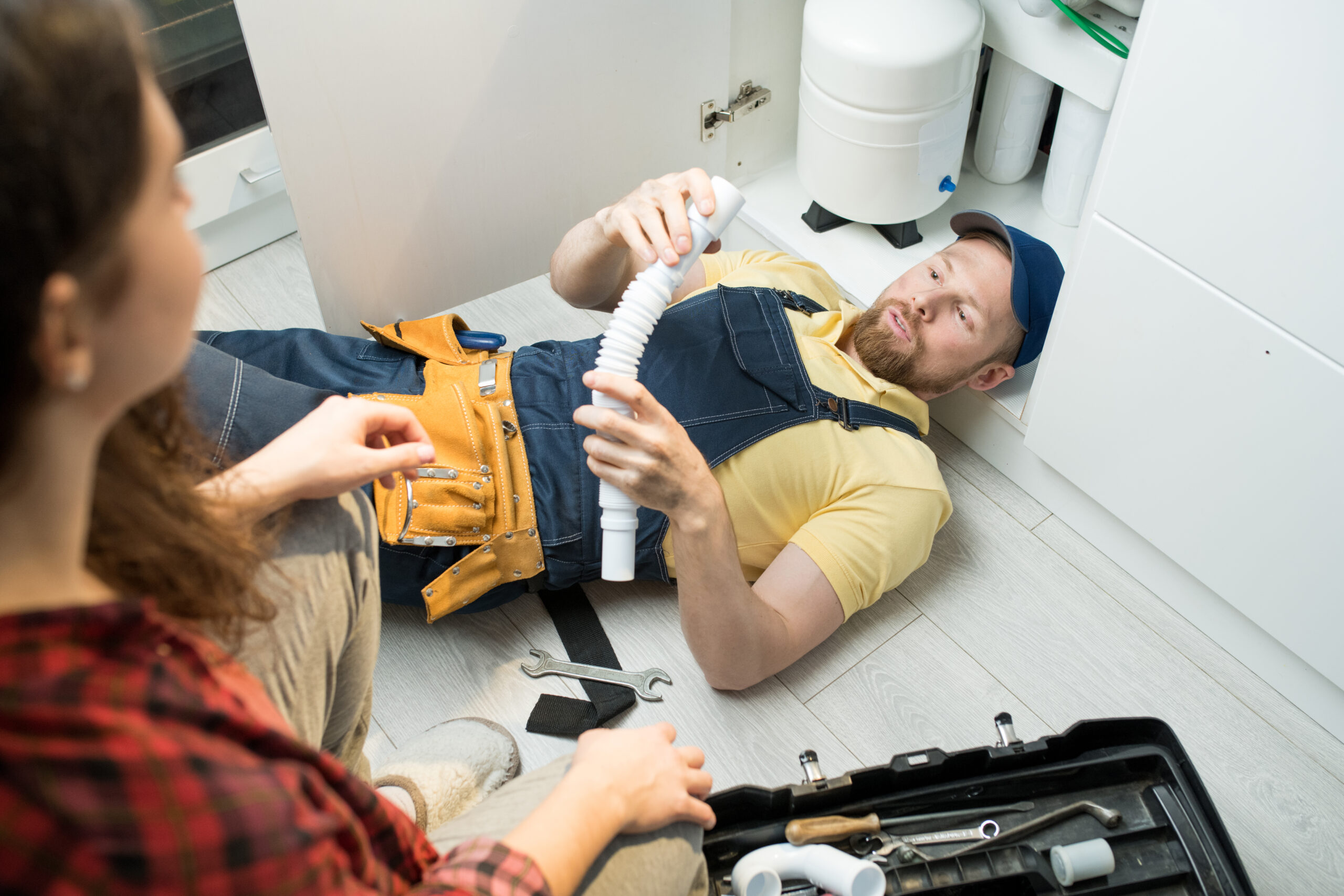
A burst pipe, a leaking water heater, or an overflowing toilet can turn a minor issue into costly damage quickly. This guide identifies common plumbing emergencies and explains what to do before help arrives. Call a professional immediately if there is an electrical risk, sewage backup, or no safe way to shut off the water.
What Defines a Plumbing Emergency
These quick response steps can help you stay safe and limit damage in some of the most common plumbing emergencies. In general, it becomes an emergency when water is actively spreading, safety is at risk, or the problem could quickly damage your home.
| Plumbing Emergency | What to Watch For |
| Burst or Frozen Pipes | Pressure drops, hissing sounds inside walls, stains, or unexplained puddles |
| Active Water Leaks | Water spreading across floors, dripping through ceilings, or pooling near outlets |
| Water Heater Problems | Leaks from the tank or relief pipe, or visible signs of overheating |
| Main Line Backups | Repeated toilet overflows or backups affecting multiple drains at once |
| Unclear but Urgent Situations | Any plumbing issue that puts your home, safety, or electrical system at risk |
Before You Touch Anything: Two Safety Rules That Matter
Always keep your distance if electricity is involved. If water sits near outlets, extension cords, power strips, or appliances, stay back. Wet outlets and wiring can cause shocks, short circuits, or fires. Never plug anything in or flip switches if water is present.
Be cautious when managing your water heater. Water heaters and supply lines may look manageable at first, but heat and pressure can make them dangerous fast. Move slowly and keep your face and hands away from valves and relief outlets. See anything unsafe? Step back and wait for a licensed plumber to arrive.
Emergency Plumber Checklist: 7 Things To Do Before Help Arrives
Shut Off The Water At The Nearest Safe Point
- Turn the closest valve that stops the leak (sink, toilet, or water heater supply).
- If that does not work, go straight to the main shutoff for the whole house.
- If you are not alone, split tasks: one person shuts off valves, the other grabs towels and buckets.
If There Is Any Electrical Risk, Cut Power Safely
- Treat water near outlets, cords, panels, or appliances as a serious hazard.
- Flip the breaker only if you can do it while staying completely dry.
- Do not unplug anything if the outlet, cord, or floor might be wet.
- Avoid fans, wet vacs, or extension cords until the power risk is confirmed clear.
Contain The Water And Protect What Matters Most
- Use towels, buckets, and pans to catch drips and slow the spread.
- Redirect water away from wood trim, floor seams, and vents if possible.
- Move rugs aside, unplug devices (only if safe to do so), and relocate valuables.
- For ceiling leaks, do not poke or cut; place buckets and wait for a pro.
Relieve Pressure And Reduce Ongoing Damage
- After shutting off the water, open the lowest cold faucet to relieve pressure and drain lines.
- If the water heater seems unsafe or overheated, leave it alone and clear the area.
- If a toilet is rising, lift the tank lid, gently raise the float, then shut the toilet supply valve.
Do A 60-Second “What Happened” Check (No DIY Repairs)
- Identify the source: supply line, fixture connection, water heater, drain, or hidden leak.
- Note warning signs like hissing, banging, burning smells, or a rotten-egg odor.
- Skip chemicals and DIY fixes; that can make damage worse.
Document Everything For Insurance And Faster Repair
- Take quick photos or videos of the leak source, affected rooms, and visible damage.
- Note when it started and which valves or breakers you shut off.
- Save receipts for emergency supplies or rentals (towels, dehumidifier, shop vac).
Get Ready For The Plumber’s Arrival
- Clear access to the problem area, shutoffs, water heater, and crawlspace or utility doors.
- Secure pets and move vehicles blocking the driveway or garage access.
- Be ready to share what happened, what you shut off, and any photos you captured.
These steps turn panic into control, paving the way for quick, solid repairs.
What To Do in Common Plumbing Emergencies

Plumbing emergencies don’t stick to your schedule. These quick guides match common crises to clear moves.
Burst Pipe Or Suspected Frozen Pipe
- Shut off the main water supply right away if you cannot locate the exact pipe.
- Open cold faucets to relieve pressure in the lines.
- Avoid open flames for thawing, including torches.
- If water is leaking behind drywall, stop the flow first, take photos of the damage, then step back.
- Let the plumber handle any cutting, opening walls, or pipe repairs.
Leaking Water Heater
- Turn off the cold water supply line to the water heater.
- For electric units, shut off power at the breaker if you can do so safely and you are dry.
- For fuel-fired units, switch the heater to the off setting.
- Keep children and pets away; hot water and slick floors can become dangerous quickly.
- If the leak is coming from the relief valve, it can signal pressure building inside the tank – be cautious when approaching and wait for a professional.
Overflowing Toilet
- Lift the float in the tank and shut the toilet’s supply valve to stop the refill.
- If it is a simple, clean-water clog, try one careful plunge. Stop if the water rises again.
- If the overflow is dirty, other drains are backing up, or it returns quickly, treat it as a main line issue and wait for help.
Tailor your response to the trouble at hand, and you cut through the panic every time.
What Not To Do Before the Plumber Arrives
Do not turn the water back on to test the problem before a plumber checks it. Leave stuck valves alone, since older fixtures can snap if forced. Do not pour drain chemicals into standing water or active backups. If a ceiling is bubbling or dripping, place a bucket underneath and wait for professional help.
What Happens When the Plumber Arrives
Plumbing Solutions LLC starts by making sure the situation is contained and safe. The plumber checks that the water is off, looks for immediate hazards, and identifies the real source of the problem. You’ll get clear next steps, repair options, and a straightforward explanation of what to watch after the visit.
What To Do After the Immediate Emergency Is Under Control
Start drying once the leak stops completely. Grab towels, run a wet or dry vacuum if safe, set up fans, and pull in a dehumidifier to chase out moisture. Check spots like baseboards, cabinet undersides, and behind toilets or heaters, where mold tends to take root first. If water spread is extensive, professional drying and cleanup may be needed to prevent mold, material damage, and warping.
When To Call Plumbing Solutions LLC

Call Plumbing Solutions LLC for burst pipes, active leaks, nonstop toilet overflows, water heater problems, or drain backups. Reach out right away if the issue is hidden behind walls, affecting multiple fixtures, or feels unsafe to handle on your own. We provide clear options and straightforward pricing for urgent plumbing problems.