


These days, most kitchens have a garbage disposal. Garbage disposals help speed up daily cleanup, eliminate kitchen sink odors, keep food waste out of landfills, and offer several additional advantages. However, once a disposal fails or, worse still, if it is incorrectly installed, it can turn from an essential kitchen device into a disaster involving leaks, moldy under sink cabinets, and even possible electrocution.
In this blog, we’ll explain what a proper disposal installation looks like and when to replace it rather than repair the broken appliance. Lastly, we’ll explain why an actual licensed disposal plumber is the best option.
Do You Need a New Disposal or a Repair?
Not all issues require a disposal replacement. If that’s the only issue, a minor repair will resolve the problem and prevent unnecessary extra costs. Common signs of failure include:
- Constant leaks around the sink flange
- A humming noise with no grinding
- Resetting the disposal multiple times
- Casing cracks or rust
- Recurring jams even after manually clearing
However, if your motor is burnt out, replace it.
Selecting the Correct Garbage Disposal (The Considerations)
Every kitchen and sink configuration is different. When we make recommendations or proceed to install a disposal, we look for a few key elements:
Motor Power and Type of Use
If you are a light user, such as a small household, you are typically suited for a 1/3-1/2 HP disposal. If you are a family or cook frequently, you need a 3/4-1 HP disposal to handle larger loads and run more quietly. However, stronger motors also grind food more efficiently, which helps prevent clogs in your pipes.
Continuous-feed vs. Batch-feed
Continuous-feed disposals are popular for a reason, and they operate with a simple switch, allowing you to continue adding food waste while in use. They do require extra awareness/precautions around an open drain. Batch-feed disposals use a safety cover instead and have the benefit of being family-friendly.
Noise and Vibration
Top-tier disposals also have anti-vibration mounts, stainless steel chambers, and sound insulation. Anti-vibration mounts are a game-changer. As professionals, we carefully balance and seal each mounting system to provide a quieter experience.
Compatibility and Connections
We analyze everything from proper sink flange sizing, trap alignment, dishwasher knockouts, and countertop air switches so that when we begin installing your disposal, we know it will fit properly and drain smoothly.
By matching the right disposal to your kitchen’s setup and usage, Plumbing Solutions LLC ensures optimal performance, quieter operation, and long-lasting reliability.
Reasons Not to Do a Disposal Installation Yourself
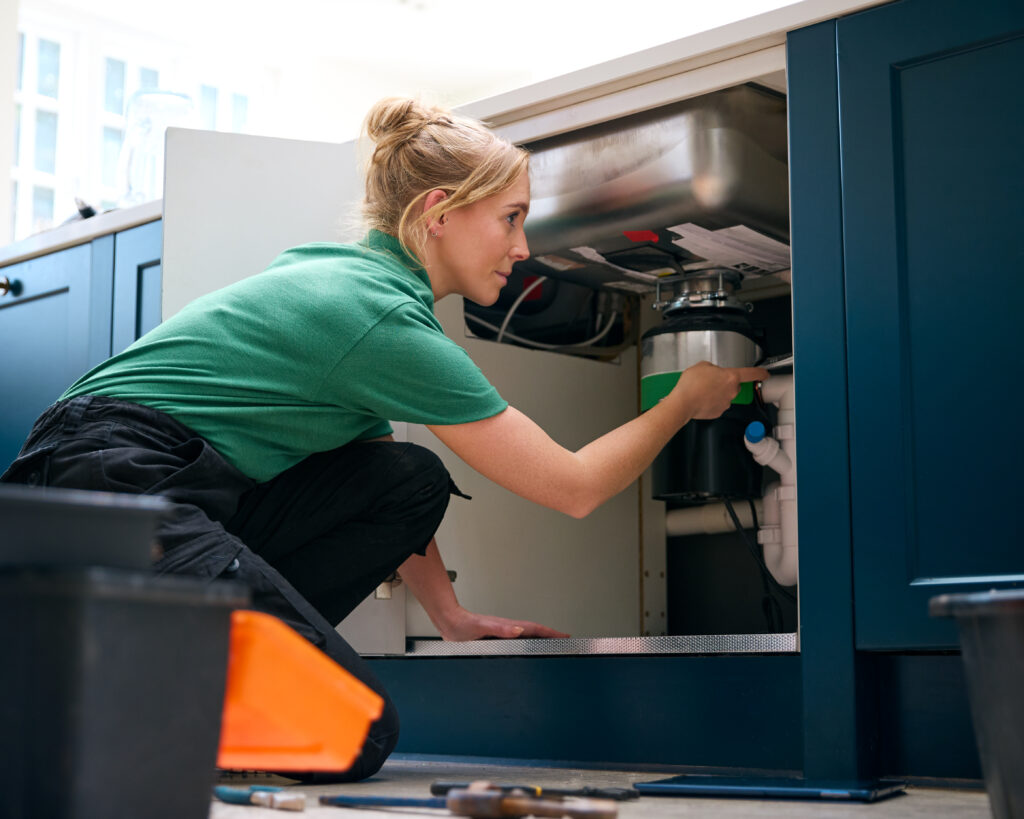
It looks attainable based on what you see in DIY videos. However, garbage disposal installation requires working with water, electricity, and precise mechanical fittings. One small mistake can lead to many problems.
Hidden Leak and Damage Hazards
Dried-out flanges or discharge tubes that are not properly aligned become “mysterious” slow leaks that become damaging to your cabinets and promote mold. Not properly sealing your disposal with plumber’s putty or silicone allows even more slow leak problems.
Shock Risk and Code Issues
Garbage disposals must be connected to a GFCI or AFCI-protected circuit, which must be the proper amp rating. If the disposal wires are not connected to the correct amp circuit, it can cause serious bodily harm or the circuit to short out and trip the main breaker supplying power to your kitchen.
Plumbing Alignment and Venting
Properly aligning the plumbing’s P-trap, venting plumbing, and or dishwasher drain is important for proper water flow, as well as preventing odors. Improperly aligned plumbing fixtures can clog and/or back up the entire sink system in the kitchen!
Warranty and Insurance Dilemmas
Most manufacturers will clearly state that the warranty is void if the disposal is installed by a DIY homeowner. Furthermore, homeowner’s insurance may entail denial of water damage claims if a licensed plumber does not install the disposal. Having a licensed plumber or certified plumber to install your disposal protects your home, your investment, and a whole lot of hassle.
In short, what looks like a quick DIY fix can turn into costly repairs. Trust Plumbing Solutions, LLC for safe, code-compliant garbage disposal installation done right the first time.
Our Professional Installation Process
If we are handling your garbage disposal installation, we will follow every step according to code and manufacturer recommendations for security and long-lasting performance.
- Site Evaluation: We will examine the sink type, cabinet space, proximity of GFCI outlets, and drainage layout.
- Removal (if needed): We will disable power, disconnect the trap, and the mounting system while containing and disposing of any remaining water safely.
- Flange & Seal: We will prepare the sink cutout by placing plumber’s putty or silicone as needed and torquing the flange with a watertight seal.
- Mounting System: We provide anti-vibration mounts, ensure the disposal chamber is level, and verify clearance from pipes and electrical cords.
- Plumbing Connections: We will inspect and seal all connections, including dishwasher knockouts, discharge tube fittings, and P-trap connections, to prevent leaks.
- Electrical: We will wire to a dedicated circuit, check the switch function, and verify a proper ground fault circuit interrupt (GFCI) test.
- Testing & Calibration: We will perform a water and grind test to validate smooth operation and no vibration.
- Clean-Up & Review: We will provide a demonstration on the proper and safe use of the disposal, reset procedures for a jam, and a maintenance plan for long-term use.
Each step in the installation process ensures that your system will be quiet, efficient, and code-compliant upon completion.
Things You Should Not Use Your Disposal For
All disposals, even the strongest food waste disposers, have operating limits. Do not use them for any of the following:
- Grease, fats, or oils
- Fibrous peels (e.g., celery, corn husks)
- Eggshells and coffee grounds
- Pasta, rice, or starchy leftovers
- Bones
- Fruit pits or non-food items
These materials can cause jammed blades and backup from solidified grease, leading to erosion of your drain lines over time.
Maintenance and Troubleshooting

To keep your kitchen sink disposal running like new:
- Clean monthly with a handful of ice and rock salt for a gentle scrub.
- Use enzyme-based drain cleaners, avoid bleach or caustic chemicals.
- Replace worn splash guards to improve performance.
- Call us if you notice repeated resets, leaks, or unusual noises.
With regular care and timely professional service, your garbage disposal will stay powerful, quiet, and clog-free.
Ready for a Hassle-Free Disposal Install?
Creating a disposal on your own will seem cheap until you make the wrong connection, leaving you with leaks, shocks, or potentially expensive cabinet damage. When you leave it to us, you will get long-lasting reliability, peace of mind, and the quality of a proper installation.
Contact us today for an in-home estimate and to schedule your safe, quiet, and code-compliant disposal installation.