
Emergency Plumbing
Reliable Service
Sunday through Friday

Midlands winters are mild most days, but one hard freeze can crack an outdoor faucet, split a pipe inside the wall or damage an outdoor shower. A little prep now protects your fixtures, your finishes and your home.
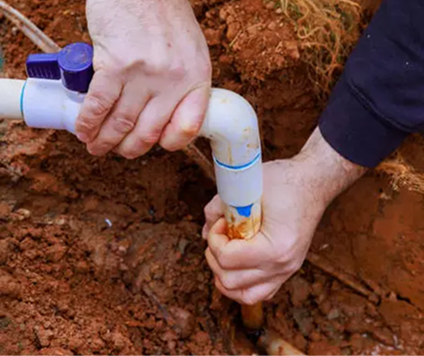
Disconnect and drain garden hoses, shut off the indoor valve that feeds each outdoor faucet, then open the faucet to drain the line. Cover it with an insulated faucet cover. For a permanent fix, replace standard outdoor faucets with frost-free hose bibs, which stop water inside the warm part of the wall.
| Fixture | Winter risk | How to protect it |
|---|---|---|
| Outdoor faucets (hose bibs) | Trapped water freezes, cracking the faucet or the pipe inside the wall | Disconnect hoses, shut off and drain, add an insulated cover |
| Garden hoses | Water left inside freezes and splits the hose and fittings | Drain completely and store indoors |
| Outdoor showers | Exposed valves and supply lines freeze | Shut off, drain the lines and remove the showerhead |
| Outdoor kitchen sinks and faucets | Supply lines and traps hold water | Shut off, drain lines and trap, cover the faucet |
| Irrigation and backflow devices | Above ground and fully exposed | Shut off, drain and insulate the backflow assembly |
| Outdoor light fixtures | Moisture, worn seals and finish wear | Clean, check gaskets and bulbs, protect the finish |
Winterize before the first hard freeze, which in the Midlands can arrive any time from November on. Water freezes at 32°F, and exposed outdoor faucets are the first fixtures at risk.
| Forecast low | What to do |
|---|---|
| Above 32°F | Finish fall prep; buy faucet covers before stores run out |
| 28–32°F | Disconnect hoses; cover every outdoor faucet |
| Below 28°F | Shut off and drain outdoor faucets, showers and outdoor sinks |
| Below 20°F | All of the above; check covers and indoor pipes on exterior walls |
Disconnect the hose. Unscrew the garden hose, drain it fully and store it indoors. A connected hose traps water in the faucet, where it freezes and cracks the pipe.
Find the indoor shutoff valve. Most outdoor faucets have a shutoff valve inside, often in a basement, crawl space, utility room or under a nearby sink.
Turn off the water supply. Close the shutoff valve so no water reaches the outdoor faucet.
Open the outdoor faucet. Turn the outdoor faucet on and let any remaining water drain out. Leave it open through the winter so trapped water can expand without damage.
Drain the line if your valve has a bleeder cap. Some indoor shutoff valves have a small drain cap. Open it over a bucket to release water left in the line, then close it.
Cover the faucet. Fit an insulated outdoor faucet cover snugly over the faucet. It adds an extra layer of protection during hard freezes.
Even a frost-free hose bib can burst if a hose is left attached, because the hose traps water in the line. Disconnect hoses every winter.
| Standard hose bib | Frost-free hose bib (sillcock) | |
|---|---|---|
| Where the valve sits | At the outside wall, in the cold | Inside the heated part of the wall |
| Freeze risk | High; water sits in the exposed faucet | Low; water stops where it stays warm |
| Winter prep | Shut off, drain and cover every year | Disconnect the hose; a cover adds extra protection |
| Best for | Mild, frost-free areas | Any home that sees freezing nights, including the Midlands |
| Key tip | Needs an indoor shutoff valve to winterize properly | Install with a slight downward slope so water drains out |
Close the dedicated shutoff valves for the outdoor shower or outdoor kitchen, usually located inside the house or in an access box.
Open the shower valve or faucet and any drain caps so water empties from both the hot and cold lines. Leave valves open over winter.
For outdoor kitchen sinks, drain or remove water from the P-trap, where standing water can freeze and crack the fitting.
Take off showerheads, hand sprayers and hoses, dry them and store them indoors.
Use a breathable cover on outdoor faucets and shower valves to keep out debris and moisture, and protect the finish from winter grime.
Wipe fixtures with a soft cloth and mild soap to remove pollen, dust and spider webs. Dirt traps moisture against the finish.
Make sure glass panels, gaskets and mounting plates sit tight. Gaps let rain and condensation inside, which can corrode sockets.
LEDs light instantly in the cold, last longer and run cooler than incandescent bulbs, and they're ideal for long winter nights.
Adjust timers or switch to dusk-to-dawn sensors so lights turn on as soon as it gets dark.
Powder-coated finishes need only gentle cleaning. Living finishes like copper and unlacquered brass will darken naturally; a light coat of paste wax slows the change if you prefer the original look.
Use clips designed for gutters and siding instead of hanging garland or lights from fixtures, which can loosen mounts and scratch finishes.
If you notice any of these, shut off the water to that faucet and call a licensed plumber. A frost-free hose bib is often the best long-term replacement.
Ice may be blocking the line, or the faucet may have cracked.
A split pipe inside the wall often only shows up the first time you use the faucet in spring.
A crack behind the wall can leak inside the house before you see anything outdoors.
Ice expands as it forms and can split the faucet itself.
Garden hoses disconnected, drained and stored
Indoor shutoff valves for outdoor faucets closed
Outdoor faucets opened to drain and left open
Insulated covers on every outdoor faucet
Outdoor shower and outdoor kitchen lines shut off and drained
Irrigation shut off and backflow assembly insulated
Outdoor light fixtures cleaned and seals checked
Bulbs replaced with LEDs; timers reset for shorter days
Plan made to upgrade faucets that freeze every year to frost-free models
Find replacement valves, frost-free hose bibs and the parts your plumber needs, with help choosing the right fit.
Our outdoor lighting and outdoor plumbing fixtures are chosen for finishes and construction that hold up to humidity, heat and the occasional hard freeze.
Compare bronze, black and brass outdoor fixtures in our Irmo showroom, so your outdoor faucets, lights and hardware match.
Planning an outdoor shower, outdoor kitchen or new entry lighting? Our team helps you choose fixtures that look great and are easy to winterize.
From frost-free hose bibs to weather-ready outdoor lighting, find what your home needs this winter, and see it in person in Irmo.
Cover outdoor faucets whenever the forecast low drops to 32°F or below. When lows fall under 28°F, also shut off the indoor valve and drain the faucet, since exposed fittings can freeze in a single night.
A frost-free hose bib is designed to resist freezing, so a cover isn't strictly required. You still need to disconnect the hose, because a connected hose traps water in the line and can cause the pipe to burst. A cover adds extra protection during hard freezes.
After shutting off the indoor supply valve, leave the outdoor faucet open. That lets any water left in the line drain or expand without cracking the faucet or pipe.
Frost-free faucets usually have a long body that extends into the wall and a handle set at an angle or perpendicular to the wall. If you're unsure, check whether water stops flowing right at the outside wall or farther inside, or ask a plumber.
Yes. A connected hose holds water in the faucet and pipe, and that water can freeze and split the pipe inside the wall, even on a frost-free hose bib. Disconnect hoses before the first freeze.
Shut off its supply valves, open the shower valve and any drain caps to empty both hot and cold lines, then remove and store the showerhead. Leave the valves open over winter and cover exposed fixtures.
Yes. Clean them, check that glass panels and gaskets are sealed, switch to LED bulbs and reset timers for shorter days. Avoid hanging heavy decor from fixtures, which can loosen mounts and scratch the finish.
Our Irmo showroom serves Columbia, Lexington and the surrounding Midlands, with plumbing parts, outdoor lighting and outdoor fixtures you can see in person.