

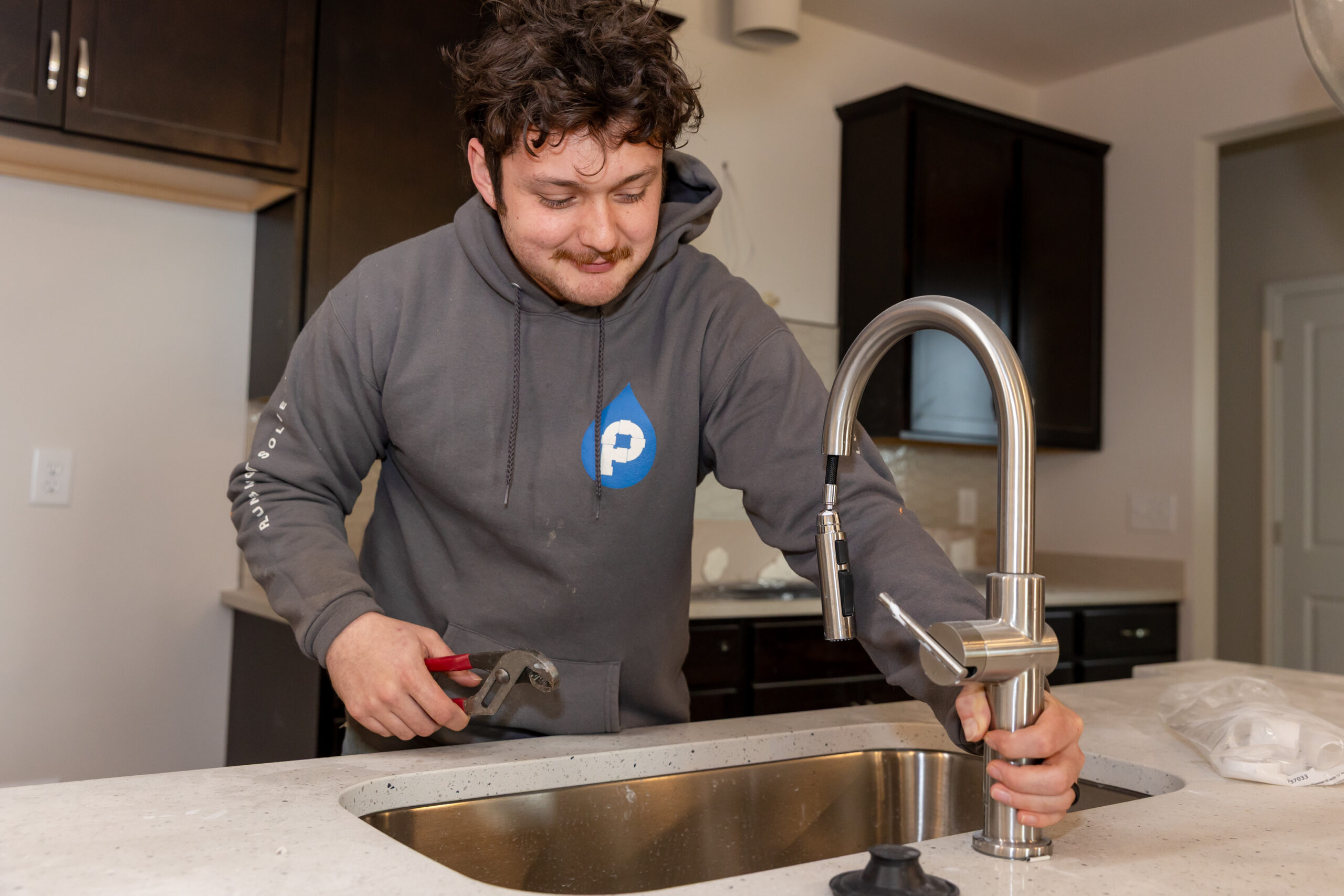
You may have spent time replacing the cartridge in your kitchen or bathroom faucet. The drip stopped. You felt accomplished. Then a week later, you hear it again: drip, drip, drip. Frustrating, right?
While a worn cartridge causes many faucet leaks, it’s not always the only problem. Faucets have several internal parts that work together to create a watertight seal.
This blog explains why leaks return after a cartridge replacement, what else might be going wrong, and when repair no longer makes sense.
Why the Cartridge Gets Blamed First
The cartridge controls water flow and shut-off in most modern faucets. When it wears out, it starts dripping. So naturally, that’s the first thing people replace.
And often, it works. But replacing the cartridge only stops leaks if it is the real issue. Oftentimes, other problems are hiding within the faucet.
Why a New Cartridge Does Not Always Stop a Faucet Leak
A returning drip usually means something else is preventing a complete seal inside the faucet. Even if the replacement cartridge is brand new, issues within the fixture itself can still allow water to leak through.
Mineral buildup, worn valve seats, damaged internal surfaces, poor alignment, or aging parts can all affect how the cartridge seals inside the faucet body. In these situations, the cartridge can be part of the problem without being the entire problem.
That is why some leaks improve briefly after a repair, then slowly return.
Common Reasons A Faucet Still Drips After A Cartridge Swap
Several issues can cause a leaky faucet to continue dripping even after the cartridge has been replaced:
- The replacement cartridge wasn’t an exact match for your faucet model.
- Mineral buildup is blocking the seal.
- The faucet body or valve seat is damaged.
- Internal O-rings or other seals are damaged.
- The installation alignment is slightly off.
- Long-term pressure and use have worn down the fixture.
In many cases, repeated dripping occurs because of wear-and-tear patterns inside the faucet, not just one failed part.
Hard Water Often Plays A Bigger Role Than Homeowners Realize
Hard water contains high levels of minerals. Over time, it can leave scale and deposits inside the faucet, around seals, and on internal contact surfaces.
Even after you install a new cartridge, that buildup can prevent proper seating. The faucet might improve briefly after the swap, then start dripping again as minerals build up in the seal.
Hard water is often the hidden cause behind returning leaks.
When The Problem Is The Faucet Body, Not The Cartridge
Older faucets can wear out inside the housing itself. If the surfaces that create a watertight seal are worn, scratched, or corroded, a new cartridge isn’t the right solution. Water can still pass through tiny gaps inside the fixture.
The cartridge needs a clean, smooth surface to seal. When that surface is damaged, no cartridge will permanently stop the drip.
Signs The Faucet Has A Bigger Problem Than One Replaceable Part
Some warning signs suggest the faucet may have broader internal wear:
- The drip returns even if the cartridge was changed.
- The handle feels loose or stiff when you turn it.
- The faucet leaks from more than one area, not just the spout.
- Water flow seems irregular.
- The fixture has been repaired multiple times over the past few years.
- You can see corrosion or mineral residue around the faucet.
These signs indicate that the wear and tear inside the fixture goes beyond a simple cartridge issue.
Why DIY Cartridge Swaps Sometimes Miss The Real Cause
Replacing a cartridge yourself is a logical first step. But DIY repairs may not:
- Remove the mineral buildup.
- Fix an incorrect cartridge, damaged internal surfaces, or worn-out seals.
The faucet may appear repaired, but the real issue will persist. This is where an experienced plumbing technician can identify what the cartridge swap missed.
Why The Drip May Seem Gone At First, Then Return
Some faucet leaks temporarily improve after a repair because the new cartridge changes how the fixture seals under light use.
However, once daily water pressure and temperature fluctuations, handle movement, and regular use continue, the underlying problem may reappear. This is why a faucet can seem fixed for a short time before the drip slowly returns.
What A Plumber Checks When A Faucet Keeps Dripping
A professional plumber looks at more than just the cartridge itself. The inspection usually includes:
- Reviewing the faucet’s age and history of repairs.
- Confirming that the cartridge is correct and properly installed.
- Inspecting for mineral buildup and internal wear.
- Checking the valve body, seals, and performance of the shutoff valve.
- Determining whether the faucet is realistically repairable or needs replacement.
Proper diagnosis helps avoid repeatedly replacing the same part without resolving the leak.
When Repairs May No Longer Be Enough
Some faucets reach a point where small repairs aren’t worth it. If the cartridge has already been replaced and the water is still dripping, the fixture may have deeper internal wear.
A repeat leak is sometimes a sign to evaluate the condition of the entire faucet rather than replacing a single part.
Replacing the faucet may be smarter when:
- The faucet is old and worn out.
- There is widespread internal wear.
- Leaks keep returning.
- Partial repairs are no longer solving the issue.
- It is difficult to find replacement parts.
Not every dripping faucet needs to be replaced. In some cases, replacing the fixture saves time and repair costs compared to repeated small fixes.
What Homeowners Can Do Before Calling A Plumber
Before contacting a local plumber, you can:
- Note when the drip happens and whether it involves hot, cold, or mixed water.
- Check whether the leak is only from the spout or also around the handle or base.
- Keep track of recent repairs or part replacements.
- Avoid overtightening the handle to stop the drip.
- Clear the area under the sink in case inspection is needed.
These small details can help speed up the faucet repair process.
When It Is Time To Call For Professional Help
A leaky faucet wastes water, adds to daily frustration, and may indicate a deeper issue within the fixture. It is better to call for professional help when:
- The drip returns after the cartridge has already been replaced.
- The faucet leaks from multiple areas.
- Repeated DIY repairs do not provide a reliable solution to the problem.
A proper inspection can determine whether the problem requires a targeted repair or a more comprehensive replacement.
Why Choose Plumbing Solutions LLC For Leaky Faucet Problems
Plumbing Solutions LLC looks beyond the obvious cartridge swap to find the real cause of recurring faucet leaks.
Our team will:
- Take a practical, solutions-focused approach to the leak issue.
- Inspect the full condition of the fixture.
- Identify hidden wear or buildup.
- Recommend a solution based on the faucet’s needs.
Whether the issue calls for a precise repair or full replacement, experts at Plumbing Solutions LLC focus on reliable results that restore proper performance and help homeowners avoid repeated problems.
Need Help With A Faucet That Still Drips After A Cartridge Swap?
If your leaky faucet came back after replacing the cartridge, the problem may involve more than one part. Our experienced team can identify the real cause, explain your options clearly, and recommend the repair or replacement solution that makes the most sense for your home.
Contact Plumbing Solutions LLC today for professional kitchen and bathroom faucet repair, plus dependable services from a trusted local plumber.