


A puddle near your water heater is easy to dismiss. It could be condensation. Maybe it will dry up on its own. Sometimes that is true. But a leaking water heater can also mean your system is overheating, over-pressurized, or failing from the inside, and waiting too long makes the damage worse.
This guide helps you decide whether it is safe to monitor the situation or if you should call for emergency plumbing service right away.
Check These 5 Things First
Before anything else, take a quick look around the unit:
- Is the water dripping steadily or is it just surface dampness?
- Is the water hot or cool to the touch?
- Is there standing water spreading across the floor?
- Is water near any outlets, extension cords, or appliances?
- Do you smell anything unusual, especially around fuel-fired units?
Your answers will determine how urgently you need to act.
Condensation Vs. A Real Leak: How To Tell The Difference
Not every damp water heater is leaking. In South Carolina, condensation is common because of high humidity, especially after a hot shower or two.
Condensation typically looks like:
- Moisture is forming outside the tank, not from a single point.
- Dampness that appears after showers or laundry cycles.
- No consistent puddle growth over time.
A serious leak usually looks like:
- Drips from a specific location like a valve, pipe joint, top connection, or side port.
- A growing puddle that keeps expanding even when hot water isn’t being used.
- Water seeping from the tank’s base or around the drain valve.
To tell the difference, dry the area with a towel and watch closely. If drips reappear at one specific location, you likely have a real leak.
The Safety Checklist: Do This If You Are Not Sure
If you suspect a real leak, take these steps before anything else:
- Stop Water Damage: Turn off the cold-water supply to the water heater if you can do so safely.
- Protect Against Electrical Risk: If water is near any powered device, avoid the area. Shut off power at the breaker only if you can do so without stepping in water.
- Avoid Burns: Leaking water can be extremely hot. Keep children and pets away from the area.
- Do Not Ignore The Relief Valve: If the temperature and pressure relief (TPR) valve is discharging water, treat it as urgent and call for assistance without delay.
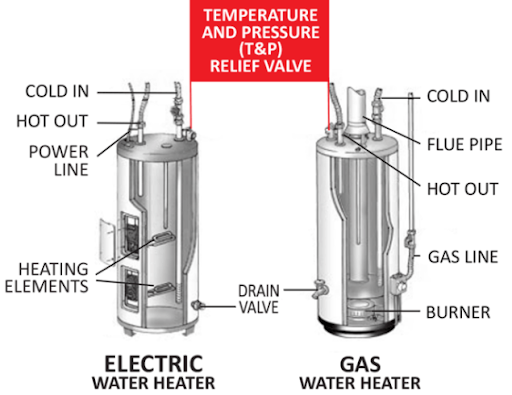
Common Leakage Sources
Loose Or Failing Connections At The Top
Drips at the hot or cold supply lines, unions, or fittings may be repairable. Even so, shut off the water supply and call for service. Small drips can cause significant damage to the floor and ceiling if left unaddressed.
Temperature And Pressure Relief Valve Discharge
Water discharging from the TPR valve line indicates overheating, excessive pressure, or an expansion issue. This is not a situation to wait on, as pressure and temperature problems require immediate professional inspection.
Drain Valve Seepage
A slow leak at the drain valve can worsen over time and fail suddenly if the valve is compromised. Do not attempt to force or randomly tighten the valve. Call for a controlled repair.
Leaking From The Bottom Of The Tank
Water appearing underneath or around the base of the unit often indicates internal tank failure. In most cases, internal tank failure means the water heater needs replacement, not a part repair.
Nearby Source Dripping Onto The Heater
Sometimes the water heater is not the source. A pipe above it, a nearby valve, or HVAC condensation can drip water onto the heater. The dry-and-watch test helps confirm the actual source.
Is It Safe To Wait? Scenarios Where Waiting May Be Reasonable
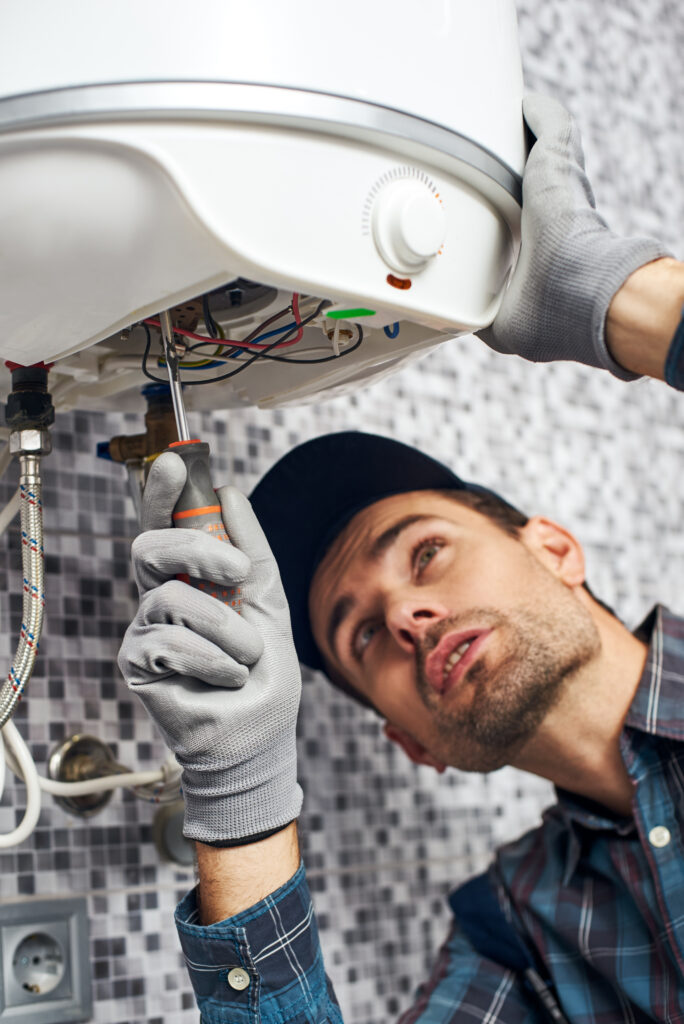
Waiting may be reasonable only if all of the following are true:
- You have confirmed that it is condensation, not a drip point or a growing puddle.
- There is light dampness; the water has not spread, and you can monitor it closely.
- You dried the area, checked again, and the moisture did not return.
Even in these cases, place a pan or towel as a precaution. Recheck within the hour and again after hot water use.
When To Call For Emergency Plumbing Service
- Water is pooling or spreading across the floor from an active leak.
- Water pools near electrical outlets, extension cords, appliances, or a breaker panel.
- A TPR valve is discharging a steady drip or flow from the relief line.
- Water is leaking from the bottom of the tank.
- Hot water spraying or dripping from fittings or valves.
- The shutoff valve won’t turn, is leaking, or you can’t get to it safely.
- If you see signs of overheating, such as unusual sounds, scalding water, or repeated TPR activity.
Call for professional plumbing service for residential or commercial water heater emergencies.
What To in an Emergency, Based On Your Heater Type
Electric Water Heater
- Shut off the breaker to the unit if it is safe to do so.
- Turn off the cold-water supply to stop additional water from entering the tank.
- Avoid touching wet surfaces near wiring or heater panels.
Gas Or Propane Water Heater
- Turn the control to the “off” position if you can safely access it.
- Turn off the cold-water supply to limit further damage.
- If you smell gas or suspect a venting issue, keep the area ventilated and call immediately.
What Not To Do
These common mistakes typically make water heater repairs harder and more costly:
- Do not run hot water to “test” the leak. This can accelerate failure and flooding.
- Do not cap, plug, or tape a TPR valve discharge line. This valve exists for safety.
- Do not force stuck shutoff valves. Old valves can snap or begin leaking under pressure.
- Do not ignore a puddle that “stops sometimes.” Intermittent leaks almost always worsen.
Not Sure If It Is Safe To Wait?
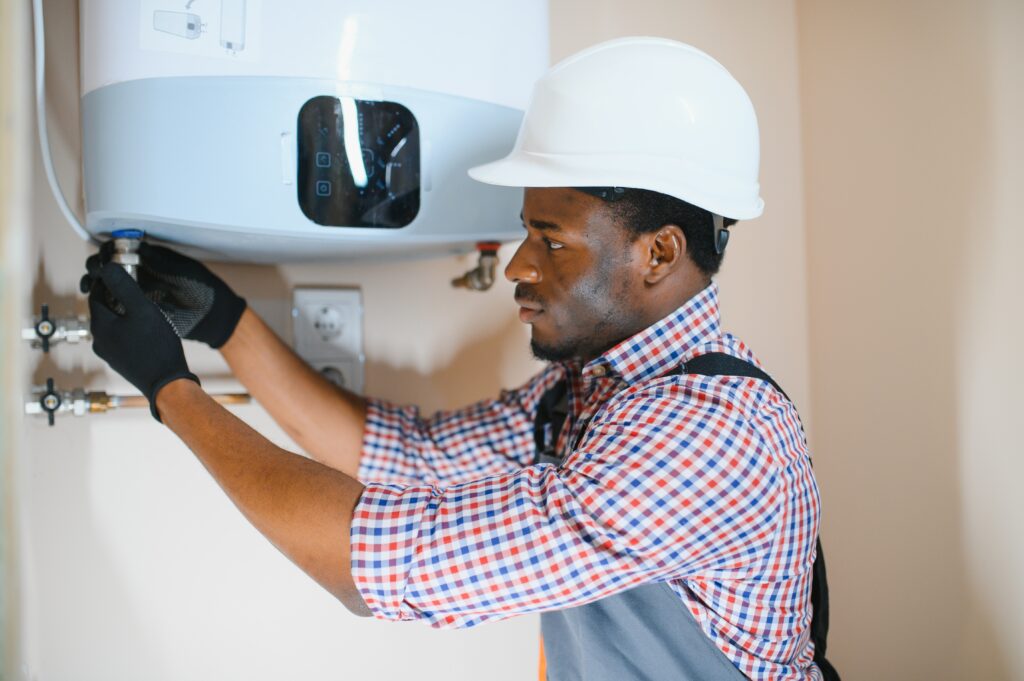
If you see active dripping, TPR valve discharge, a growing puddle, or any electrical hazard near the unit, treat it as urgent.
Schedule a service call with Plumbing Solutions LLC for emergency service or a same-day evaluation. Licensed plumbers will identify the source, explain your options, and safely restore your hot water.