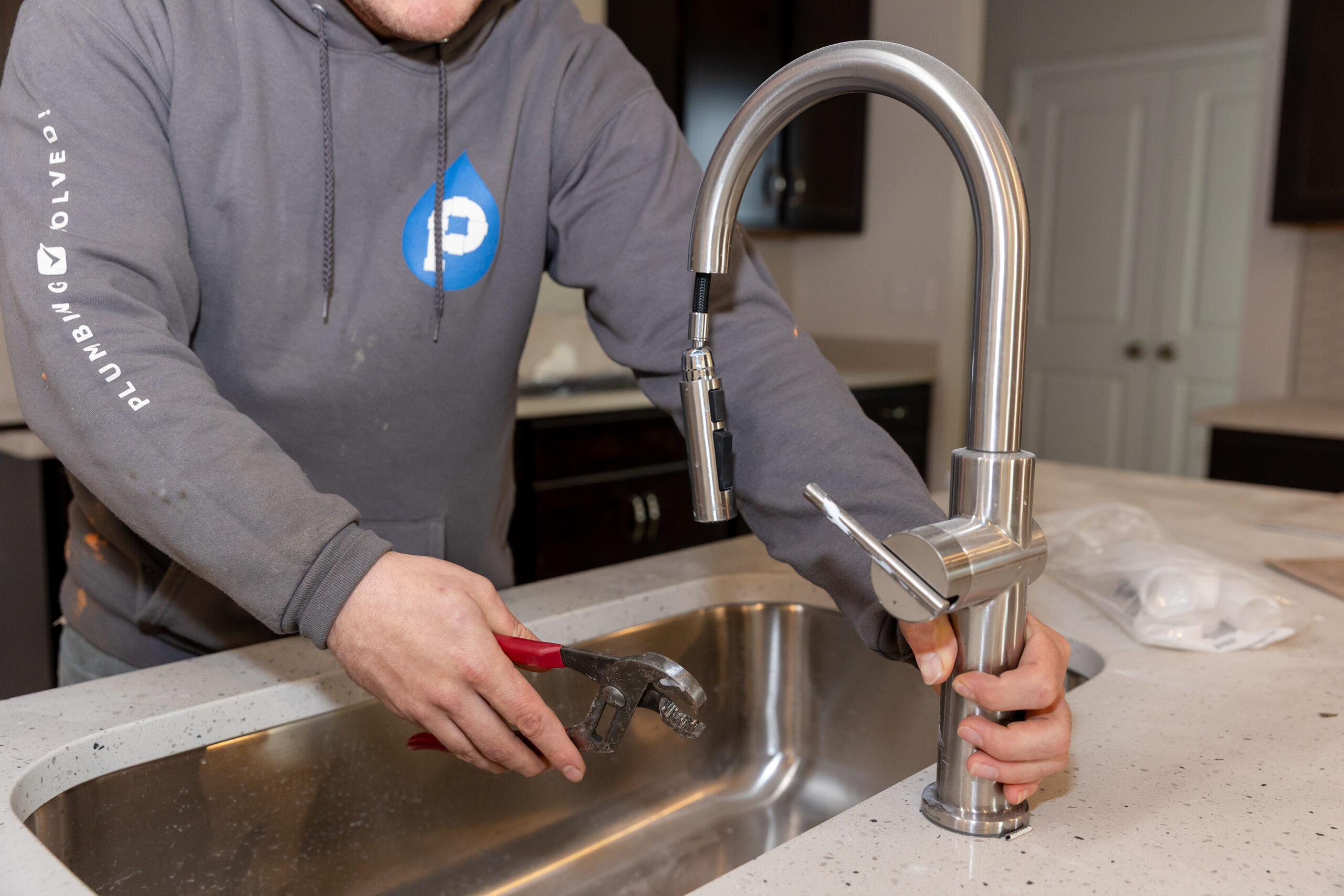
Kitchen sink problems do not always start with one obvious blockage. In many cases, a kitchen sink clog develops gradually as grease, oil, soap residue, and food particles collect inside the drain line.
This buildup happens slowly, so the sink may continue draining for months before the problem becomes noticeable. This can make it difficult to recognize that a restriction is forming.
In this guide, we’ll explain how grease buildup affects kitchen drains, why quick DIY fixes often only provide temporary relief, and when professional drain cleaning may be the best solution.
Why Kitchen Sink Clogs Form Differently Than Other Drain Clogs
Kitchen drains handle a different type of waste than other drains. Instead of just hair and soap scum, kitchen pipes are exposed to grease, cooking oils, food residue, starches, and dishwashing debris.
Over time, these materials can stick to the inside of the pipe. Rather than creating one simple blockage near the drain opening, they often form a coating that gradually restricts water flow.
What Happens When Grease Goes Down The Drain
Grease may look harmless when it is hot and liquid, but it usually does not stay that way inside the plumbing system.
As grease cools, it thickens and clings to the pipe’s inner walls. Once a layer forms, it can start trapping soap residue, food particles, and other debris that passes through the drain.
Why Grease Builds In Layers Instead Of Causing One Immediate Blockage
Most grease-related clogs develop over time. A small amount of grease once may not cause any major problems, but repeatedly disposing of grease creates a sticky surface in the drain that collects more and more debris.
As the layers thicken, the drain narrows. This is why a sink may drain a little slower over time before eventually developing a more serious blockage.
Common Kitchen Habits That Make Grease Buildup Worse
Even small habits can lead to long-term drain problems.
- Pouring bacon grease, oil, or pan drippings into the sink.
- Rinsing sauces, butter, and cooking fats from cookware.
- Putting greasy food scraps through the garbage disposal.
- Washing starchy foods that leave residue behind.
- Assuming hot water will carry everything safely through the line.
While none of these actions may cause an immediate clog, repeated exposure can gradually restrict the drain.
Why Hot Water And Dish Soap Do Not Solve The Real Problem
Many homeowners believe hot water and dish soap will eliminate grease buildup. While they may help move some grease a short distance, they do not remove buildup already attached to the pipe walls.
As the grease travels farther through the plumbing, it cools again and can continue collecting inside the line. This means the underlying restriction often remains.
Signs Grease May Be Building Up In The Kitchen Drain
Grease buildup often causes warning signs before a complete blockage develops. Some of the common signs include:
- The sink drains slower than usual.
- Water backs up when the garbage disposal is turned on.
- Unpleasant odors from the drain.
- A clog that keeps returning after a temporary fix.
- Standing water during dishwashing.
- Gurgling sounds after water drains.
- Water backing up into the other side of a double sink.
These symptoms often indicate a restriction somewhere inside the drain line.
Why Grease Buildup Often Gets Worse Before A Homeowner Realizes It
Grease-related drain problems are easy to ignore at first because the sink still appears to work. Water may eventually drain, even if it takes longer than normal.
Meanwhile, the buildup continues to grow inside the pipe, making it easier for food particles and sludge to become trapped and worsen the restriction.
Why Garbage Disposals Can Make A Grease Problem Harder To Notice
A garbage disposal can create a false impression that food waste is being completely removed from the system. However, ground-up food still has to travel through the drain line.
If grease is already coating the pipe wall, those particles can stick to the residue, causing additional buildup.
Why DIY Drain Fixes Often Give Only Temporary Relief
DIY methods can sometimes temporarily fix drainage, but they do not always solve the underlying problem. A plunger, drain cleaner, or basic drain snake may create a small opening through the blockage.
But the greasy film coating the pipe often remains behind. This allows new debris to collect and the slowdown to return.
Why Chemical Drain Cleaners Are Not A Reliable Answer For Grease Buildup
Chemical drain cleaners are often marketed as a quick solution, but they do not necessarily remove heavy grease buildup throughout the drain line. In some cases, they provide temporary improvement without addressing the actual restriction.
Using chemical cleaners repeatedly is not the same as thorough drain cleaning when layers of grease have built up over time.
When A Kitchen Sink Clog May Point To A Bigger Drain Problem

Sometimes the issue extends beyond the sink trap or a short section of pipe beneath the sink.
If backups keep recurring, there may be significant grease accumulation farther down the line, or a larger drainage issue may be affecting the kitchen branch line. It is best to have recurring clogs diagnosed by professional plumbers before they become a bigger problem.
What A Plumber Checks When Grease Buildup Is Suspected
When grease buildup is suspected, a plumber will typically do the following:
- Review the history of slow drainage and backups.
- Check whether the problem affects only the kitchen sink or other fixtures too.
- Inspect accessible drain components.
- Identify whether the restriction is near the sink or deeper in the line.
- Use appropriate equipment to clear and evaluate the blockage.
Proper diagnosis ensures the right part of the system is being examined and addressed.
How Professional Drain Cleaning Thoroughly Removes The Clog
Professional drain cleaning is designed to remove more than just enough material to get water moving again. It involves the following:
- Clearing as much buildup as possible from the pipe walls.
- Restoring smoother flow throughout the line.
In cases of heavy grease accumulation, a plumber may recommend methods such as hydro-jetting, which uses high-pressure water to remove stubborn residue.
This provides a more thorough solution than simply creating a temporary path through the blockage.
How To Help Prevent Grease Clogs From Returning
A few simple habits can reduce the risk of future kitchen drain problems:
- Let the grease cool, then dispose of it in the trash.
- Wipe greasy pans before washing them.
- Use sink strainers to catch food particles.
- Avoid overloading the garbage disposal with greasy leftovers.
- Pay attention to slow drainage and recurring odors.
- Schedule service before a minor restriction becomes a major blockage.
These small changes can make a big difference over time.
When It Is Time To Call For Professional Help
A slow kitchen drain does not always require immediate attention, but some signs should not be ignored. Consider calling a plumber if:
- The sink continues to drain slowly.
- Odors keep coming from the drain.
- Water backs up repeatedly.
- The garbage disposal causes backups.
- DIY fixes no longer last.
Addressing the problem early can help prevent a manageable restriction from turning into a complete kitchen sink clog and a larger cleanup issue.
Why Choose Plumbing Solutions LLC For Kitchen Sink Drain Problems
Not every kitchen sink clog has the same cause. The issue may be grease buildup, food debris, a blockage in the disposal, or a restriction deeper in the drain system.
At Plumbing Solutions LLC, we focus on:
- Identifying the actual cause of the problem.
- Evaluating the condition of the drain line.
- Recommending the most appropriate solution based on what is actually happening inside the system.
Need Help With A Kitchen Sink Clog That Keeps Coming Back?

If your kitchen sink keeps draining slowly or backing up after temporary fixes, it may be time for expert diagnosis.
Plumbing Solutions LLC provides professional drain cleaning, kitchen sink plumbing, and kitchen sink repair services throughout South Carolina.
Contact Plumbing Solutions LLC today to schedule service and restore proper flow before a recurring kitchen sink clog turns into a more disruptive plumbing problem.
FAQs
Why does my kitchen sink keep slowing down even after I clear the drain?
Grease coats the inner pipe walls in layers over time, so clearing one blockage leaves the residue behind. New food particles and debris stick to that coating, and the restriction builds back up quickly.
Does hot water and dish soap break down grease inside the drain line?
It may move some grease a short distance, but it does not remove buildup already attached to the pipe walls. As the grease travels farther and cools, it continues to collect inside the line.
Can a garbage disposal make grease buildup worse?
Yes. Ground-up food particles still travel through the drain line, and if grease is already coating the pipe, those particles stick to the residue, increasing the restriction over time.